California CRV on beer, wine and spirits: what store owners need to know
California charges CRV of 5 cents on containers under 24 ounces, 10 cents on 24 ounces and up, and 25 cents on wine and spirits in boxes and pouches. Wine and spirits have been covered since January 1, 2024. Here's how to charge it right.
Arjun ChemparathyPublished 5 min read
California stores charge CRV (California Redemption Value) on beer, wine, spirits and most other drinks in sealed containers: 5 cents for containers under 24 ounces, 10 cents for 24 ounces or more, and 25 cents for wine or spirits in a box, bag or pouch. Wine and distilled spirits joined the program on January 1, 2024. If you sell them, you should be charging CRV on them.
Below: how CRV works, the rates, what changed for wine and spirits, and the mistakes that are easy to make at the register.
What is CRV, and who pays it?
CRV is a deposit-style charge that runs through the whole chain. Your distributor pays it to the state and adds it to your invoice. You charge it to the customer at the register. The customer gets it back when they return the empty container to a recycling center.
So CRV is not a cost to your store as long as you charge it. If you don't, you're paying it out of your margin on every container.
California CRV rates
| Container | Under 24 oz | 24 oz or more |
|---|---|---|
| Aluminum, glass, plastic or bimetal | 5¢ | 10¢ |
| Wine or spirits in a bag-in-box, multilayer pouch, paperboard carton or similar | 25¢ | 25¢ |
Sources: CalRecycle, Retailers/Dealers and CalRecycle, Wine and Distilled Spirits.
CRV is per container, not per pack. A 6-pack of 12 oz cans is six containers at 5 cents: 30 cents. A case of 24 is $1.20.
What changed for wine and spirits in 2024
A 2022 law (SB 1013) added new drinks to the program starting January 1, 2024:
- All wine and distilled spirits
- Wine and distilled spirit coolers and mixed cocktails, at any alcohol percentage
- Boxes, bladders and pouches of wine or spirits, at a new 25-cent rate
From that date your distributors began charging you CRV on these items, and you could start charging your customers. (CalRecycle dealer workshop, December 2023)
Labels on the bottle. Wine and spirits don't need the CRV message printed on them yet. CalRecycle says CRV labeling of non-exempt wine and spirits is required beginning July 1, 2026. Wine and spirits bottled before January 1, 2024 never need the label. An unlabeled bottle still carries CRV. No message on the bottle doesn't mean no CRV. (CalRecycle, Wine and Distilled Spirits)
Charging CRV at the register
- Charge it on every covered container. That includes wine, spirits and coolers, not just beer and soda.
- Use the right size tier. The line is 24 ounces. Most 750 ml wine and spirits bottles (about 25.4 oz), 1 L and 1.75 L bottles are 10 cents. 50 ml, 200 ml and 375 ml bottles are 5 cents.
- Count containers, not packs. A 4-pack of 16 oz cans is 20 cents. A 12-pack is 60 cents.
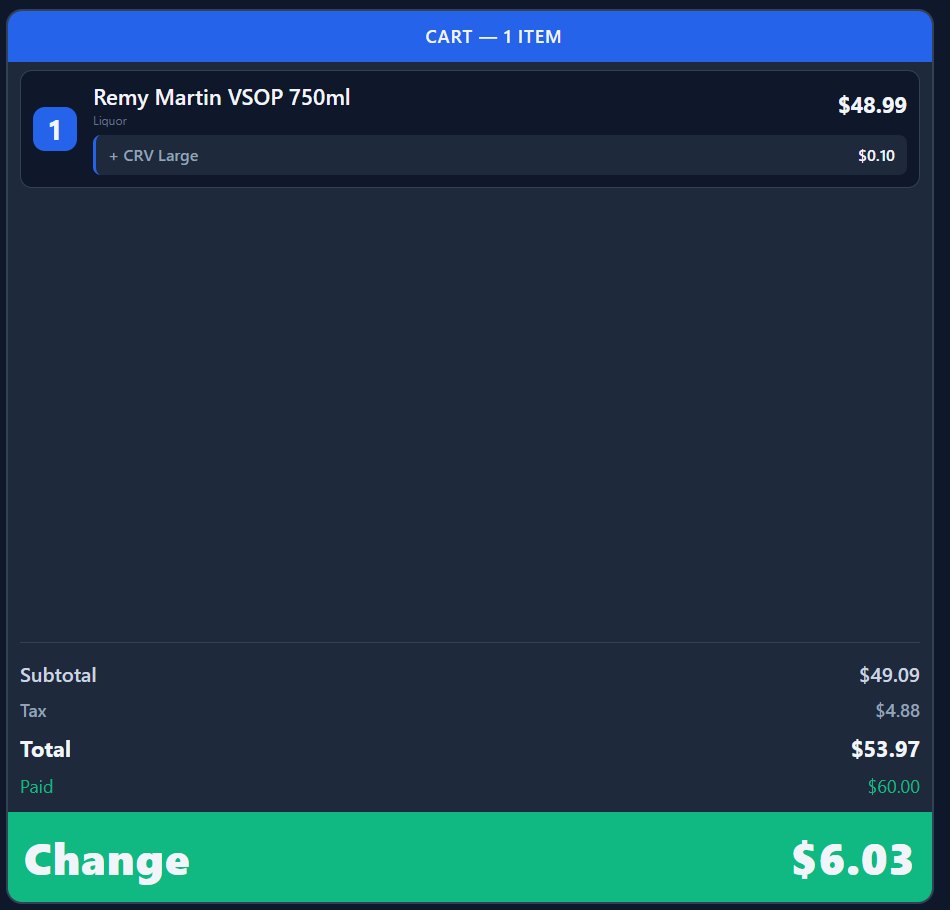
- Show it on the receipt. CalRecycle expects CRV beverages on your receipts and encourages showing CRV as a separate line, so customers can see what they paid. (CalRecycle)
- Include CRV in the taxable amount. The CDTFA says: "Generally, if the sale of the beverage is taxable, tax also applies to the separate California Redemption Value (CRV) charge." The taxable amount is the beverage, the container and the CRV together. (CDTFA, Tax Guide for Liquor Store Operators)
Shelf labels
Stores with more than 4,000 square feet of sales and storage area must show CRV as a separate part of the price on shelf labels and in ads, for example "$1.99 + 30¢ CRV". Smaller stores don't have to, though it helps customers understand the total. (CalRecycle)
Do you have to take back empties?
It depends on where your store is. CalRecycle draws a convenience zone around each supermarket. If no recycling center serves the zone, it is "unserved", and dealers in it must either:
- Redeem in the store (take empties and pay out CRV), or
- Join a dealer cooperative that handles redemption for its members.
Since January 1, 2025, those are the two options, and dealers who meet certain revenue or size criteria can apply to be exempt. CalRecycle sends notices to stores in newly unserved zones. If you get one, read it and answer by the date it gives. (CalRecycle, Convenience Zones, Dealer Cooperatives, Wine and Distilled Spirits)
Every dealer must also post a sign at least 10 by 15 inches at the public entrance saying where the nearest recycling center is. (CalRecycle)
Common CRV mistakes
- No CRV on wine and spirits. Your distributor has been charging you CRV on them since 2024, so if you don't charge it, you're paying it.
- 750 ml charged at 5 cents. It's over 24 ounces, so it's 10 cents.
- CRV per pack instead of per container. A 12-pack is 12 containers.
- CRV left out of the taxable amount. If the drink is taxable, so is its CRV.
- Prices that already "include" CRV. It makes shelf prices and receipts hard to check, and it's not allowed on shelf labels in stores over 4,000 square feet.
- Missing the 25-cent rate on boxed wine and spirit pouches.
How Ceyyo handles CRV
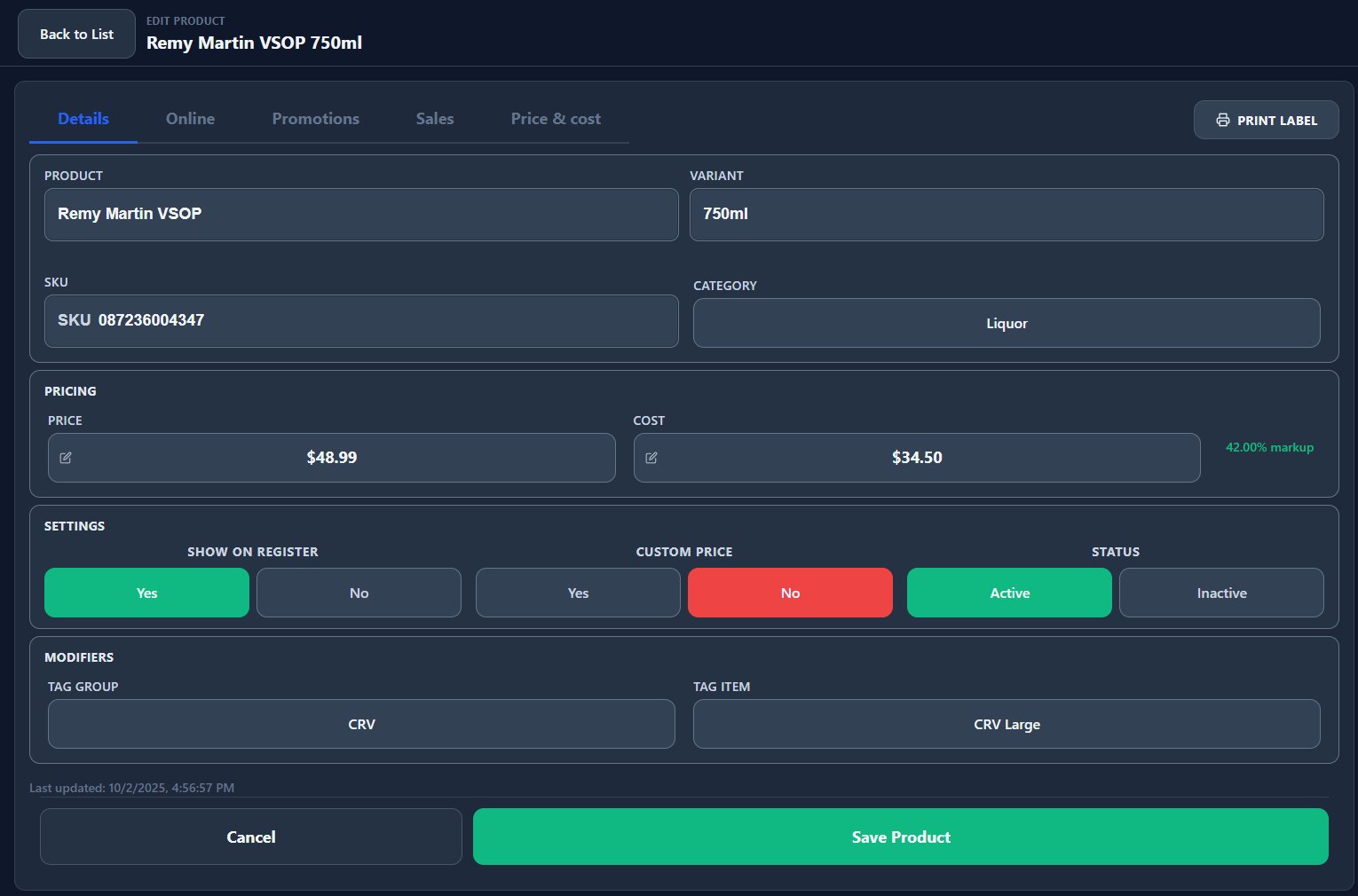
In Ceyyo, each product carries its CRV option, set once on the product form. The register adds it every time the item rings up, and the receipt prints it as its own line under the item, with the amount for the quantity sold. When you add a new item from a distributor invoice, Ceyyo shows the CRV the invoice charged per unit, so you can pick the right option.

Questions
- Does CRV apply to wine and liquor in California?
- Yes. Since January 1, 2024, wine, distilled spirits, and wine and spirit coolers are part of California's CRV program. Glass, aluminum, plastic and bimetal containers pay 5 or 10 cents by size, and boxes, bags and pouches pay 25 cents.
- Is a 750 ml bottle 5 cents or 10 cents CRV?
- 10 cents. A 750 ml bottle holds about 25.4 ounces, which is over the 24-ounce line.
- Is CRV taxable in California?
- When the drink is taxable, yes. The CDTFA says that if the sale of the beverage is taxable, tax also applies to the CRV charge, and the taxable amount is the beverage, the container and the CRV together. Beer, wine and spirits are taxable.
- Do I have to show CRV on the receipt?
- CalRecycle expects dealers to include CRV beverages on receipts, and encourages showing CRV as its own line. Stores over 4,000 square feet must also show CRV separately on shelf labels and in ads.
- Do I have to take back empty containers?
- Only if your store is in an unserved convenience zone and is not exempt. Then you either redeem in the store or join a dealer cooperative. CalRecycle sends notices to stores that are affected.